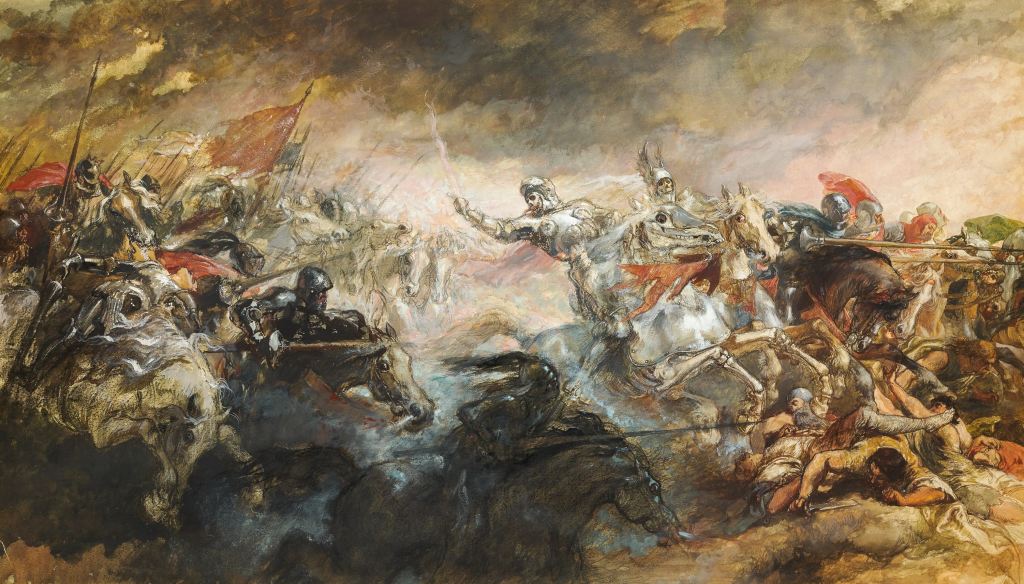
Prior to 1919, there was no recognized field of study for international relations. It first came to place as a major in Aberystwyth following World War I. Understanding the causes of the war and developing solutions for it were the discipline’s main goals when it was first established . Regardless of whether the establishment of the discipline was successful or not, the Second World War came out, and the whole international system changed from the beginning. The field encountered challenges from the outset, such as being Western-centric, which made it difficult to create a universal solution for different cultures and ethnicities. Additionally, the discipline’s impact on nations and non-governmental organizations posed additional challenges. Moreover, within the discipline of IR, particularly in mainstream theories, the state is commonly regarded as the dominant actor. That is why the international arena was challenging, and the further goals of the states were difficult to predict. Consequently, it has also engendered a Security Dilemma within the IR. In this article, my aim is to identify the current challenges that the discipline is encountering. Subsequently, an analysis will be conducted to explore the various approaches proposed by different theories in addressing these issues, as well as strategies for decolonizing this discipline that is mainly influenced by Western perspectives.
“You will get very different answers to world political puzzles and problems from the different theories. Every author, every ideology, and every theory can answer differently to related topics.”
Theories of IR have the potential to provide different perspectives for understanding a wide range of cases. Scholars have noted that the discipline occasionally ignores cultural and ethnic differences. The selection and utilization of theories in the field of IR is based upon one’s personal values and convictions regarding the fundamental nature of the discipline. Thus, by utilizing various theoretical frameworks and diverse perspectives, we can analyze and address contemporary challenges. For example, the Russian-Ukrainian war can be viewed from various theoretical perspectives, such as realism and liberalism, each offering distinct insights into the event. Because which theory you see as being the most useful will depend on what you want to explain in the first place. In this way, theories actually help in a way to overcome some of the problems that the discipline of IR is facing nowadays. Especially, the theories like post-colonialism and post-structuralism point out these problems really well. However, we can trace the origin of the discipline and several of its theories to Western societies. The issue of Western-centric IR continues to exist, but with notable shifts in perception and theories since the beginning of the 21st century. With this shift, theories of IR can define the different problems by focusing on issues like social interactions and discourses.
The field of international relations originated in Western nations. Initially, this was not viewed negatively. However, considering the phenomenon of globalization, it is significant that in today’s world, non-western nations hold similar influence to their western rivals. Hence, the perspectives of these nations assume an important position. The impact of their voices in today’s global sphere on international politics has become stronger than that of previous eras. Hence, the research conducted by scholars in these nations holds equal significance to the work of western scholars. If we really want to decolonize the study of international relations, we can’t just settle for Western viewpoints; rather, we need to encourage and promote a global perspective and encourage others to do the same. By doing so, we will be able to conduct a more accurate analysis of today’s modern international political system as well as the globalized world. Decolonizing the discipline will be challenging, given that western ideologies shaped the development of modern IR. However, in spite of this, we should be encouraged to continue this field of study because of the different issues, like the variety of human societies and ethnicities, the rise of non-Western powers, the impact of nongovernmental organizations, and other side effects. Last but not least, in recent times, post-colonial theories and critical approaches to IR have clarified the reasons for a more globalized IR and the effects of a post-colonial world in the aftermath of the Second World War.
“IR as a discipline “maps” the world”
When Aberystwyth established the discipline of IR, the founding countries sought to steer clear of wars and comprehend their causes. Postcolonial perspectives assert that European history and background consistently elevate their own era. A post-structuralist viewpoint in the 20th century illustrated this by displaying maps from 1569 that centered on Europe and favored European settlement. Furthermore, it symbolized the dominance of Western nations. However, in the world we live in today, it is nearly impossible to develop a global framework, or even a theory, that only considers Western approaches and aspects. The study of IR evolved over time to become more multilateral and less one-sided as the world became more globalized. The discipline of IR is not considered a branch of the physical sciences. It also progresses as time and the world pass by. There might not be clear answers to the problems we face. However, since there are a variety of theories and ways of understanding, we can approach cases from a number of different perspectives. Even though theories cannot entirely solve the challenges the discipline of IR is facing today, a deeper understanding of these challenges is a significant step towards developing effective solutions and decolonizing the discipline.



 beratwrites
Leave a comment